
40 Years in Markland Wood: How Our Pharmacy Has Grown With the Community

For more than four decades, Marklandwood Pharmacy has served as a familiar healthcare destination for individuals and families in Etobicoke. In fact, the pharmacy’s published history now describes a legacy extending beyond 50 years. During that time, medications, technology, professional responsibilities, and patient expectations have changed considerably, but personalized community care has remained central to the pharmacy’s purpose. A neighbourhood pharmacy is more than a location where prescriptions are collected. It is often the most accessible point of contact in the healthcare system. Patients may visit for medication counselling, vaccination, prescription renewal support, compliance packaging, blood pressure monitoring, minor-ailment assessment, travel-health preparation, or help understanding a newly prescribed treatment. A longstanding pharmacist in Etobicoke may care for several generations of the same family. Over time, the pharmacist becomes familiar with medication histories, chronic conditions, communication preferences, adherence challenges, allergies, and caregiving responsibilities. This continuity creates an important foundation for safer treatment and more personal healthcare. Key Takeaways Growing Alongside Markland Wood Markland Wood is a residential neighbourhood in western Etobicoke, positioned near the Toronto–Mississauga boundary. Development of the neighbourhood began during the 1960s, and its identity has been shaped by homes, schools, parks, local businesses and community organizations. The Markland Wood Homeowners Association was formed to create and maintain a strong community spirit among residents. The pharmacy’s location at 4335 Bloor Street West, near Bloor Street and Mill Road, has allowed it to serve residents of Markland Wood and surrounding Etobicoke communities. Its proximity to homes, local healthcare providers and neighbourhood services makes it practical for patients who need prescriptions, professional advice or assistance managing ongoing health conditions. Over the years, the community itself has changed. Young families have grown older, children have become adults, and many residents have taken on caregiving responsibilities for parents or spouses. New residents have also arrived with different healthcare experiences, languages, treatment needs and expectations. A community pharmacy must continuously adapt to these demographic changes while providing consistent and equitable care. The meaning of a community extends beyond people simply occupying the same geographic area. A community is built through interaction, shared identity, familiarity and mutual support. A pharmacy contributes to that structure when patients know where to ask questions, receive reliable guidance and find help navigating an increasingly complex healthcare system. Relationships Built One Prescription at a Time Trust in pharmacy care usually develops gradually. It may begin with a pharmacist explaining how to take a new antibiotic, helping a parent select an appropriate non-prescription treatment, or identifying a potential interaction before a medication is dispensed. These individual encounters create confidence that the pharmacy team is attentive, available and prepared to address concerns. Long-term relationships can become especially valuable when patients use several medications. A pharmacist familiar with the patient’s history may recognize an unexpected dosage change, identify a duplicate therapy, clarify whether a medication has been discontinued, or notice that a refill pattern suggests difficulty following the treatment plan. Continuity also supports communication. Patients are more likely to ask questions when they feel known and respected. They may be more comfortable discussing adverse effects, affordability concerns, missed doses, swallowing difficulties or confusion about instructions. These conversations allow the pharmacist to address problems before they cause treatment failure or avoidable harm. From Traditional Dispensing to Comprehensive Pharmacy Care Prescription dispensing has always been a central responsibility of community pharmacy. Every prescription requires accurate interpretation, appropriate product selection, dosage verification, patient assessment, documentation and counselling. Although technology now supports many administrative tasks, professional judgment remains essential whenever a medication is prepared and released to a patient. Modern pharmacy practice has expanded well beyond counting tablets and attaching labels. Ontario pharmacists may dispense and compound medications, renew or adapt certain prescriptions, administer authorized injections, provide medication reviews, demonstrate self-testing devices and prescribe treatment for specified conditions within their professional scope. This broader role reflects the accessibility of pharmacists. People may have questions after a medical appointment, when starting a new prescription, while managing a chronic illness or when deciding whether a symptom requires urgent assessment. A pharmacist can evaluate the situation, provide appropriate guidance and refer the patient to a physician or emergency service when necessary. The change does not replace the work of family physicians, nurse practitioners or specialists. Instead, community pharmacy functions as part of the patient’s circle of care. Pharmacists can help translate a treatment plan into safe daily medication use while communicating relevant information to other healthcare professionals when consent and applicable requirements permit. Medication Reviews and Chronic Disease Support Medication regimens often become more complicated with age or chronic disease. A person living with diabetes, hypertension, cardiovascular disease, arthritis or a respiratory condition may use several prescription drugs in addition to vitamins and non-prescription products. The risk of interactions, confusion and inconsistent use increases as the number of products grows. A structured medication review gives the patient an opportunity to discuss what each medication does, how it should be taken and whether any problems have developed. The pharmacist can assess adherence, duplication, potential interactions, administration technique and the need for follow-up with the prescriber. Disease-management support may also include blood pressure monitoring, counselling about blood glucose management, instruction on inhalers or injection devices, and recommendations for safer non-prescription medication use. Markland Wood Pharmacy’s public service listing includes disease counselling, blood pressure monitoring, diabetes education and MedsCheck services. Compliance Packaging and Caregiver Assistance Following a medication schedule can become difficult when tablets must be taken at different times of day. Changes in memory, vision, hand strength or cognitive function may create additional barriers. Compliance packaging organizes medication by scheduled dose, allowing patients and caregivers to see whether a dose has been taken. Markland Wood Pharmacy lists blister packaging and medication organization among its community services. These options may be helpful for older adults, people with complex regimens, individuals recovering from illness, and family members coordinating medication care for someone else. Packaging is most effective when combined with regular medication reconciliation. Hospital discharge, specialist appointments and dosage adjustments can all change
Generic vs. Brand Name Medications: Are You Overpaying?
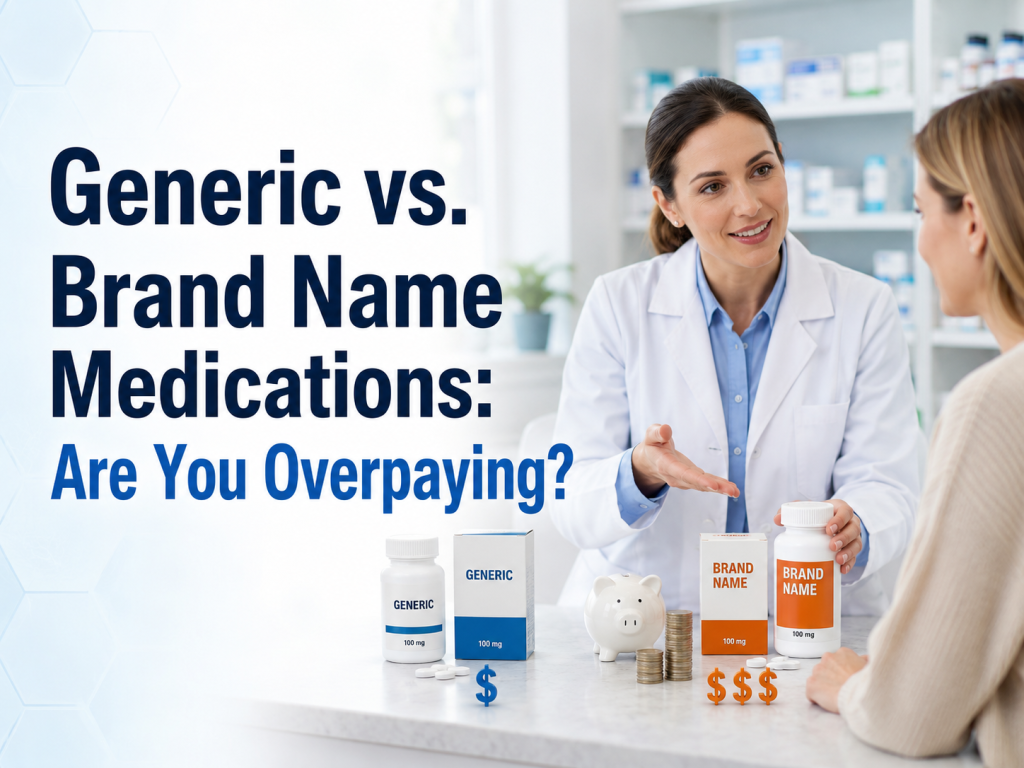
Prescription costs can add up quickly for people managing diabetes, high blood pressure, elevated cholesterol, arthritis, mental health conditions, or other long-term health concerns. When a pharmacy offers a generic medication instead of a familiar brand, some patients wonder whether they are receiving a lower-quality product. Others continue paying for the brand because they are uncertain whether switching is safe. A conversation with a pharmacist in Etobicoke can help determine whether an approved generic alternative is available, how much it may reduce the patient’s out-of-pocket expense, and whether there are clinical reasons to remain with a particular manufacturer. The answer is not always as simple as choosing the least expensive package. Health Canada requires generic medications to meet regulatory standards for quality, safety, effectiveness, pharmaceutical equivalence, and bioequivalence before they can be sold in Canada. However, drug-plan rules, non-medicinal ingredients, dosage forms, manufacturer changes, deductibles, dispensing fees, and individual treatment responses can influence the final decision. Key Takeaways What Is the Difference Between Brand Name and Generic Medication? A brand name medication is usually the first version of a drug brought to market by its manufacturer. The company develops the product, completes the required research, submits evidence to Health Canada, and markets the medication under a proprietary name. Patent and data-protection rules may temporarily prevent another manufacturer from selling a comparable generic product. A generic drug becomes available after the applicable protections have been addressed. Health Canada defines it as a pharmaceutically equivalent version of a reference medication. It must contain identical medicinal ingredients in the same amounts and use a similar dosage form. For example, a generic 10-milligram tablet must deliver the same medicinal ingredient and strength as its approved 10-milligram reference tablet. The word “generic” does not mean unregulated, weaker, counterfeit, or homemade. Before marketing a generic medication, its manufacturer must submit an Abbreviated New Drug Submission containing information about ingredients, manufacturing, quality testing, specifications, and comparative performance. Health Canada reviews the submission and issues a Notice of Compliance and Drug Identification Number only when regulatory requirements are satisfied. Generic products can look different because manufacturers may use different colours, tablet shapes, coatings, markings, fillers, binders, or flavouring agents. These non-medicinal ingredients cannot be allowed to change the product’s approved safety, quality, or effectiveness. The difference in appearance can nevertheless confuse patients, especially when the same medication changes colour after a refill. Are Generic Medications as Effective as Brand Name Drugs? For conventional generic drugs, Health Canada requires evidence of bioequivalence to the Canadian reference product. Bioequivalence means there is no significant difference in the rate and extent at which the medicinal ingredient becomes available in the body. This concept is related to bioavailability, which describes how much of a medication reaches the circulation and how quickly it gets there. Comparative studies commonly measure medication concentrations in the blood after volunteers receive the reference product and the proposed generic product under controlled conditions. When the products satisfy Health Canada’s applicable standards, they are expected to produce the same therapeutic effects and safety profile when used according to their approved labelling. Generic and brand name manufacturers must comply with federal quality requirements. Manufacturing facilities, ingredients, processes, and completed drug batches are subject to quality controls. Health Canada also monitors approved generic and brand name medications after they enter the market through adverse-reaction reports, safety reviews, labelling changes, inspections, and other regulatory measures. A lower price should therefore not be interpreted as evidence of reduced therapeutic value. Generic manufacturers can rely partly on evidence already established for the reference product while still conducting the comparative testing required for their own medication. Generics also generally enter the market after patent or data-protection periods, and competition among manufacturers can place downward pressure on prices. Why Some Patients Notice a Difference A patient may notice that a new tablet is larger, smaller, differently shaped, or more difficult to swallow. Another product may use a different coating, dye, sweetener, preservative, filler, or flavouring ingredient. These physical differences do not mean that the medicinal ingredient is weaker, but they may affect acceptability or tolerability for a small number of patients. Patients with a confirmed allergy or intolerance should tell the pharmacy before every new product is dispensed. The pharmacist can examine the product monograph, manufacturer information, and available ingredient data. A previous reaction should not automatically be blamed on generic status; the reaction may relate to the medicinal ingredient, an inactive ingredient, the illness itself, or another medication. Confusion can also create an apparent treatment problem. A person who does not recognize a newly shaped tablet may skip it, take an extra dose, or mistakenly combine it with leftover medication from another manufacturer. The Ontario College of Pharmacists identifies communication about brand or manufacturer changes as good practice because it reduces confusion about names, colours, shapes, and markings. Are You Paying More Than Necessary in Ontario? Generic medications are usually available at a lower cost than their reference brands. However, the amount a patient personally saves depends on the medication, quantity, pharmacy pricing, dispensing fee, deductible, co-payment, public coverage, private insurance, coordination of benefits, and whether the plan restricts reimbursement to the lower-cost interchangeable product. Many Canadian drug plans limit the amount they will reimburse for a brand name product after an approved generic becomes available. A patient who requests the brand without meeting the plan’s medical-exception criteria may be responsible for some or all of the price difference. The exact calculation varies, so patients should request a coverage check rather than assuming the brand and generic will have the same co-payment. Ontario’s public drug programs generally use formulary listings and interchangeability designations to determine eligible products and reimbursement. The Ontario Drug Benefit program covers most eligible costs for qualifying residents, subject to applicable deductibles and co-payments. The Trillium Drug Program may help Ontario households whose prescription expenses are high relative to household income. Being offered a generic medication does not necessarily mean the pharmacy is making a clinical change to a different drug.
Meet Your Markland Wood Pharmacy Team: Who’s Behind the Counter?

Walk into Markland Wood Pharmacy on Bloor Street West and you won’t be greeted by a stranger reading your name off a screen. You’ll be greeted by someone who has probably filled your prescription before, remembers that you switched blood pressure medications last spring, and can tell you – in English, Russian, Ukrainian, Serbian, Albanian, or Macedonian – exactly when your refill will be ready. That’s the difference a real neighbourhood pharmacy makes, and it starts with the people behind the counter. For over 50 years, Markland Wood Pharmacy has been a fixture of the Etobicoke community, and much of that trust comes down to a team that simply doesn’t turn over the way big-box pharmacy staff do. Some of the people you’ll meet in this post have worked at this exact location since 2004 or 2005 – that’s two decades of knowing this community by name. This post answers the questions Markland Wood patients actually ask: who’s filling my prescription, who’s giving my flu shot, and why does it matter that the same faces have been here for years? Let’s introduce you to the team. Who Works at Markland Wood Pharmacy? Markland Wood Pharmacy is staffed by a full pharmacy care team, not just a single pharmacist working alone. The team is generally organized into three groups: Each group plays a distinct role, but at a pharmacy this size, the lines blur in a good way – everyone tends to know every regular patient, not just “their” section of the store. Who Are the Pharmacists at Markland Wood Pharmacy? The pharmacists are the clinical backbone of the team – the ones reviewing your prescriptions, catching potential interactions, and administering vaccines. Markland Wood’s pharmacist team includes practitioners with real depth of training: Tanya, PharmD, completed her Bachelor of Science at the University of Toronto before earning her Doctor of Pharmacy from the State University of New York at Buffalo. She has focused much of her career on expanding what a community pharmacist can do – helping build pharmacist-run vaccination and travel clinic programs, and working closely with physicians, specialists, nurses, dietitians, and naturopathic and homeopathic practitioners across the community. She has also contributed to the development of Canada’s first Doctor of Pharmacy experiential program at the University of Toronto’s Leslie Dan Faculty of Pharmacy. So-Young is a graduate of the Leslie Dan Faculty of Pharmacy – Canada’s largest pharmacy school – and has served as a managing pharmacist supporting the health of this community for close to two decades. Slava earned his pharmacy degree in 2007 and has been a fixture in the Markland Wood dispensary ever since. He’s certified in vaccine administration and has personally given immunizations to a large share of the neighbourhood. He also teaches, serving as a Clinical Teaching Assistant for medication therapy management courses and as a preceptor for Advanced Pharmacy Practice Experience students completing their Doctor of Pharmacy at the University of Toronto. What Does a Pharmacy Technician Do at Markland Wood Pharmacy? A registered pharmacy technician handles the precision work that keeps a busy dispensary accurate – measuring, labelling, and cross-checking every prescription before a pharmacist gives the final clinical sign-off. Angela is a registered Pharmacy Technician with the Ontario College of Pharmacists and a member of the Canadian Association of Pharmacy Technicians. She completed the National Pharmacy Technician bridging program at Humber College, and holds additional diplomas in Computer Networking (Algonquin College) and Economics. Angela has been part of the Markland Wood team since 2005 – meaning she’s been double-checking prescriptions for this community for more than two decades. Who Are the Pharmacy Assistants Behind the Dispensary? Pharmacy assistants support the technical and administrative side of dispensing, and at Markland Wood, they’re often the ones on the phone confirming your refill is ready. Loreta has worked in the pharmacy dispensary for more than 12 years and is currently completing her registered pharmacy technician certificate, on top of existing medical secretary and accounting certifications. Tatjana (sometimes written as Tatiana in patient reviews) is a pharmacy assistant known for going out of her way to make sure every patient’s needs are fully met – she’s mentioned by name in more than one online review from long-time patients. Who Runs the Front Store Team? The front store is where most patients have their first – and most frequent – interaction with the pharmacy, whether it’s picking up a compliance pack, mailing a parcel through Canada Post, or grabbing an over-the-counter product. Nataliya has led the front store team since 2005. A graduate of Humber College’s business management program, she assists customers in English, Russian, and Ukrainian. Radinka supports the front store manager with daily operations and has worked at this location for 17 years. She knows many regular customers by name and can assist in English or Serbian. Janie has spent 17 years making sure every customer has a positive shopping experience, helping Markland Wood feel less like a retail counter and more like a community health hub. Stefka has served as a front store cashier since 2004, assisting patients in English, Albanian, Macedonian, and Serbian. She’s also trained in hairdressing and helps customers navigate the pharmacy’s hair care selection. Why Does It Matter That the Same Team Has Served Markland Wood for Decades? Staff tenure isn’t just a nice detail – it directly affects the quality of care you receive. When a pharmacy technician has worked the same dispensary for 20 years, she recognizes when something about your order looks off before it becomes a problem. When a front store lead has greeted you by name since 2005, she notices if you haven’t been in for a refill you usually pick up like clockwork. This kind of continuity is difficult for large chain pharmacies to replicate, where staff frequently rotate between locations. At Markland Wood, long tenure means your medication history, your preferences, and your family’s needs are held in real institutional memory – not just a database entry. What Languages Does the